

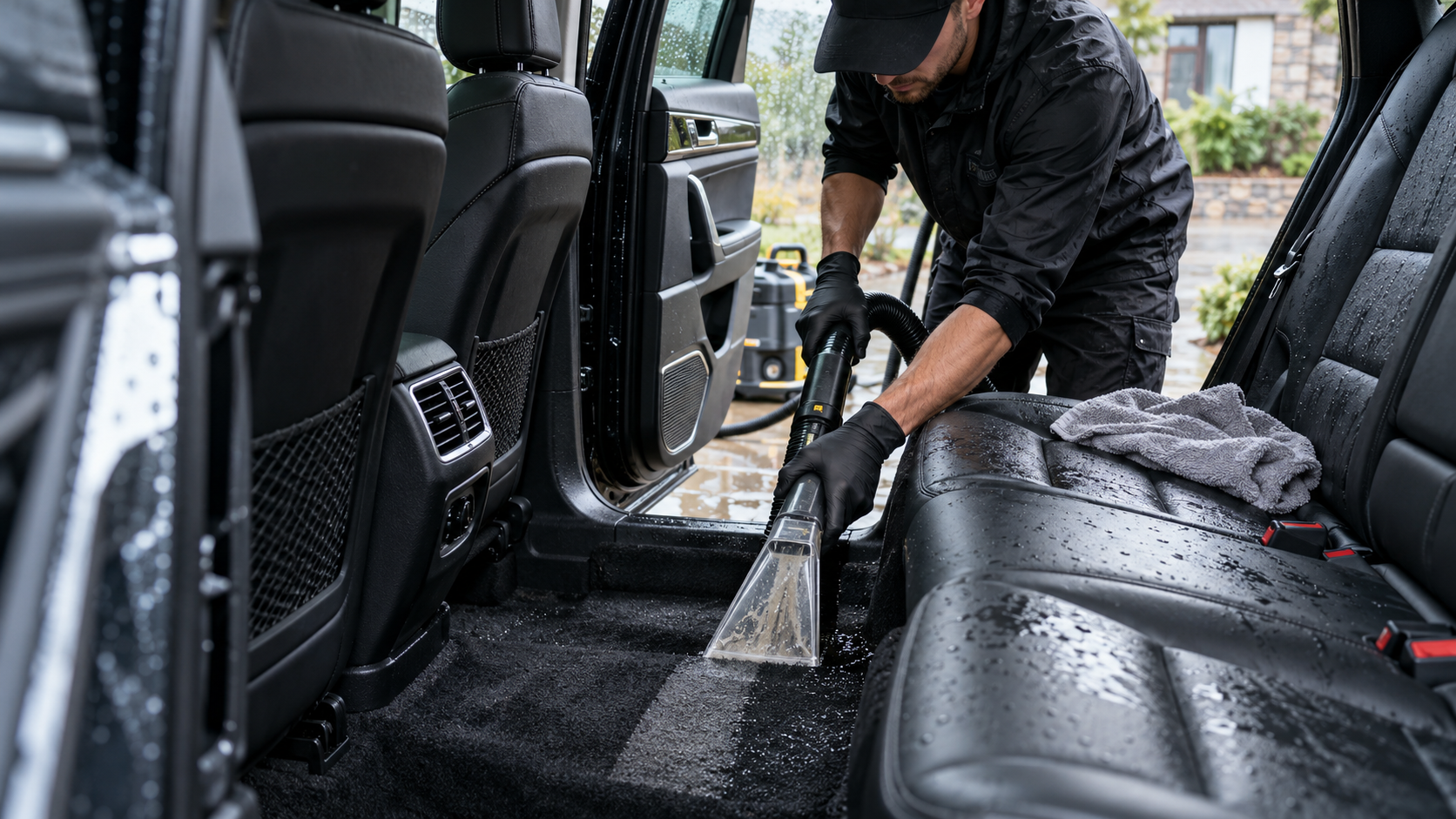
To dry your car interior after rain, stop further exposure, remove wet belongings and floor mats, and blot accessible water with clean towels. Then use sheltered airflow and, where a suitable setup allows, dehumidification. Removing water comes before cleaning or treating odors.
These steps are for limited rain exposure through an open window or sunroof—not flooding or water-damaged electrical systems. In Naples and Southwest Florida, humid air and another sudden shower can complicate drying, so a protected location matters more than simply finding a sunny parking spot.
First, decide whether this is a minor wet-interior problem
A damp seat cushion or a localized wet patch of carpet is different from substantial standing water, flood exposure or water reaching electrical components.
Stop ordinary DIY drying and arrange qualified assessment if:
- The vehicle was exposed to floodwater or contaminated water.
- There is substantial pooling, especially around areas containing wiring or electronics.
- Water reached visible connectors, electrical modules, dashboard areas or electrical components beneath a seat.
- Warning lights or unusual electrical behavior appeared after the exposure.
- You see suspected mold growth.
If flooding or wet electrical components are suspected, do not start the vehicle or switch systems on to test them. Contact a qualified repair facility for guidance on assessment and transport. You do not need to dismantle anything to decide that the exposure is beyond a minor cleanup.
For limited rain exposure without these warning signs, begin with the accessible steps below. If moving the car would require operating it when its safety is uncertain, leave it in place and seek help instead.
Stop more rain and remove loose wet items
Move under cover if the vehicle is safe to operate, and close the window or sunroof that admitted the rain. Do not leave openings unattended while showers are still possible.
Remove loose items that hold water: towels, clothing, bags, umbrellas and removable floor mats. Keep wet belongings out of the cabin while they dry.
Next, inspect the areas you can reach without removing seats or trim:
- Seat cushions, backrests and seams near the open window
- Front and rear footwells
- Carpet beneath removable mats
- Door pockets and other accessible recesses
- Visible areas beneath seats, without touching connectors or wiring
The goal is to understand the extent of wetness, not just clean the most obvious spot. Rain on a seat and water on the floor need separate attention.
Do not pull up fitted carpet, disconnect seat wiring or remove floor plugs as a general drying shortcut. If accessing retained water requires dismantling the interior, that is a reason to involve a repair or water-damage specialist.
Remove accessible water before trying to air-dry
Start with clean, absorbent towels. Press them into wet cloth upholstery or carpet, lift them away, and replace or wring them out as they become saturated. Blot rather than scrubbing.
For smooth upholstery and trim, gently absorb visible water, including water sitting along accessible seams. Avoid pushing it into openings or controls.
A vacuum can help remove water from accessible carpet, but it must be specifically rated for liquid pickup. An upholstery attachment does not make a household dry-only vacuum safe for water. Follow the wet-rated vacuum's instructions for its liquid-pickup configuration and permitted use; do not assume it is suitable for extracting every seat or interior surface.
NAPA's wet-interior guidance supports removing accessible water before relying on air drying. That is the useful distinction: water removal reduces what still needs to dry, but it does not prove that deeper materials are dry.
If you do not own suitable equipment, use towels for a small, localized wet area. If towels cannot keep up with the amount of water, arrange qualified help rather than trying to evaporate a heavily soaked interior with a fan alone.
Match your approach to the material
Your vehicle's interior-care instructions take priority, particularly for specialty upholstery and seats with built-in electrical features.
| Area | Useful first action | Important limit |
|---|---|---|
| Cloth seats | Press clean towels into wet areas, then provide sheltered airflow. | Do not assume a dry fabric surface means the cushion beneath it is dry. |
| Leather or synthetic upholstery | Blot visible water promptly and gently dry accessible seams. | Do not add conditioner, solvents or cleaning solution as a drying treatment. Use only care products appropriate for the specific finish when cleaning is needed later. |
| Perforated, heated, ventilated or powered seats | Blot accessible surface water without forcing water through openings. | Do not improvise seat extraction or use seat heaters as dryers. If water reached electrical components, use the assessment boundary above. |
| Fitted carpet | Blot water; use liquid-rated vacuum equipment only where its instructions and the vehicle's care guidance allow. | Carpet padding beneath the visible surface can remain wet. |
| Removable mats | Remove, blot or wipe as appropriate, and dry separately in a protected, ventilated location. | Keep them out until both sides and the underlying carpet are dry on repeated checks. |
Avoid hair dryers, heat guns and concentrated heat on upholstery or trim. Do not add steam or more cleaning water to an already wet interior simply because it smells damp. Cleaning and drying are different tasks.
Choose a drying setup that suits humid weather
Once accessible water is removed, the remaining job is drying. Airflow, ventilation and dehumidification serve different purposes; they are not interchangeable guarantees.
Sheltered ventilation and fans
For minor wetness, open doors or windows in a secure, rain-protected location while you can monitor the vehicle. Airflow across the affected seats and footwells helps the drying process.
A fan can support that airflow, but use it only in a location and manner permitted by its instructions. Keep appliances, plugs and electrical connections away from wet surfaces. Do not improvise an electrical setup across a wet driveway or through an opening exposed to rain.
Ventilation is less effective when the surrounding air is very humid. A fan moves air; it does not remove moisture from the surrounding space. If the interior remains damp despite airflow, reassess the drying conditions and whether water reached deeper layers.
Dehumidification in a suitable enclosed space
A dehumidifier removes moisture from the air and can complement airflow in an appropriate enclosed drying space. This differs from open-air ventilation: leaving the treated space open to humid outdoor air works against moisture control.
Use a portable dehumidifier only where its instructions permit the location, electrical supply, clearances and drainage arrangement. Do not assume a household unit is suitable for placement inside a wet vehicle. If you lack an appropriate enclosed space, choose another safe setup or seek help rather than improvising one.
Dehumidification is a drying aid, not evidence that water beneath carpet or inside a seat has been removed.
Vehicle climate control
Climate control is a supplemental option, not a substitute for blotting or removing accessible water. Its usefulness depends on the vehicle's system and operating conditions, so follow the owner's manual rather than a universal heater or air-conditioning setting.
Use it only when the vehicle is safe to operate and parked outdoors in a safe location. Never run a combustion engine in a garage or other enclosed space to dry the interior—even with the garage door open. Exhaust creates a carbon-monoxide hazard.
For Southwest Florida owners without covered parking, repeatedly opening the car between showers is not a reliable drying plan. If you cannot keep the vehicle protected while drying it, arranging suitable space or qualified assistance is the more practical choice.
Check progress instead of trusting a deadline
There is no single drying time for a rain-wet interior. A lightly damp surface and a soaked cushion are different problems. Water quantity, materials, humidity, airflow and access to concealed wet areas all change the job.
Seat foam and carpet padding can retain moisture beneath a surface that feels dry. Surface checks are useful for tracking progress, but they cannot certify concealed dryness.
During drying, revisit the same accessible areas:
- Press a clean, dry towel into the wettest spots and check for transferred moisture.
- Check seat seams, footwells and accessible carpet edges.
- Inspect both sides of removable mats separately from the carpet.
- Recheck later for returning dampness, including after the vehicle has been closed.
Keep damp mats out of the cabin. Once they and the carpet are dry, reinstall them securely using the vehicle's retention system, keeping the driver's pedals clear.
If repeated checks show little progress, a seat remains damp beneath the surface, or carpet becomes wet again, do not keep extending the same drying routine indefinitely. The next step is to determine whether moisture is trapped out of reach or entering again.
What if dampness or a musty odor comes back?
A returning odor is a troubleshooting clue—not a diagnosis of mold. Likewise, a pleasant smell after applying fragrance does not establish that the moisture problem is resolved.
Skip air fresheners and do not rely on baking soda or small moisture-absorbing packs to replace actual water removal. Recheck the wet areas and consider what changed:
- Wetness returns after another rain, even with the windows closed: Have a repair shop investigate the entry path, including seals or sunroof drainage where relevant.
- The original area stays damp despite surface drying: A water-damage specialist or qualified repair facility can assess whether concealed materials need access and drying.
- Musty odor persists or suspected growth appears: Seek an assessment appropriate to moisture or mold concerns rather than booking ordinary cleaning as remediation.
- Electrical symptoms appear: Use a qualified repair facility, not a detailing appointment, for diagnosis.
Do not probe sunroof drains or apply sealant at random. Fixing an ongoing leak requires identifying where the water enters.
Where interior detailing fits
After minor rain exposure is dry and any water-damage concerns have been addressed, interior detailing can help with ordinary dirt and residue on affected surfaces. It is also a convenient option if you prefer professional interior cleaning rather than tackling the cleanup yourself.
WOW Detailing's interior detailing service is a mobile option for owners in Naples and Southwest Florida. That service should not be treated as concealed-padding drying, flood restoration, mold remediation or electrical repair. Stains and odors also should not be assumed removable without assessment.
The priority is straightforward: remove accessible water, use a safe drying setup, and verify progress beyond the first dry-feeling surface. If dampness returns, address its source before covering it with mats or fragrance.
Once the interior is dry and water-damage concerns are resolved, request a quote for WOW's interior detailing. Include your vehicle model, location and current photos to help explain the cleaning needed.
Want professional help with your car?
Send us your vehicle make, model and a few current photos. We’ll recommend the right service based on the car’s actual condition.
Request a Quote